
What is a solid fuel boiler?
A solid fuel boiler is a heating appliance that burns logs, wood briquettes or approved smokeless fuel to heat water for radiators and, usually, a hot water cylinder. In UK homes it comes in three main forms: a back boiler behind an open fire or inset fire, a boiler stove with a water jacket built into a free-standing stove, and an independent solid fuel boiler that sits in a kitchen, utility room or outbuilding and does nothing but heat water.
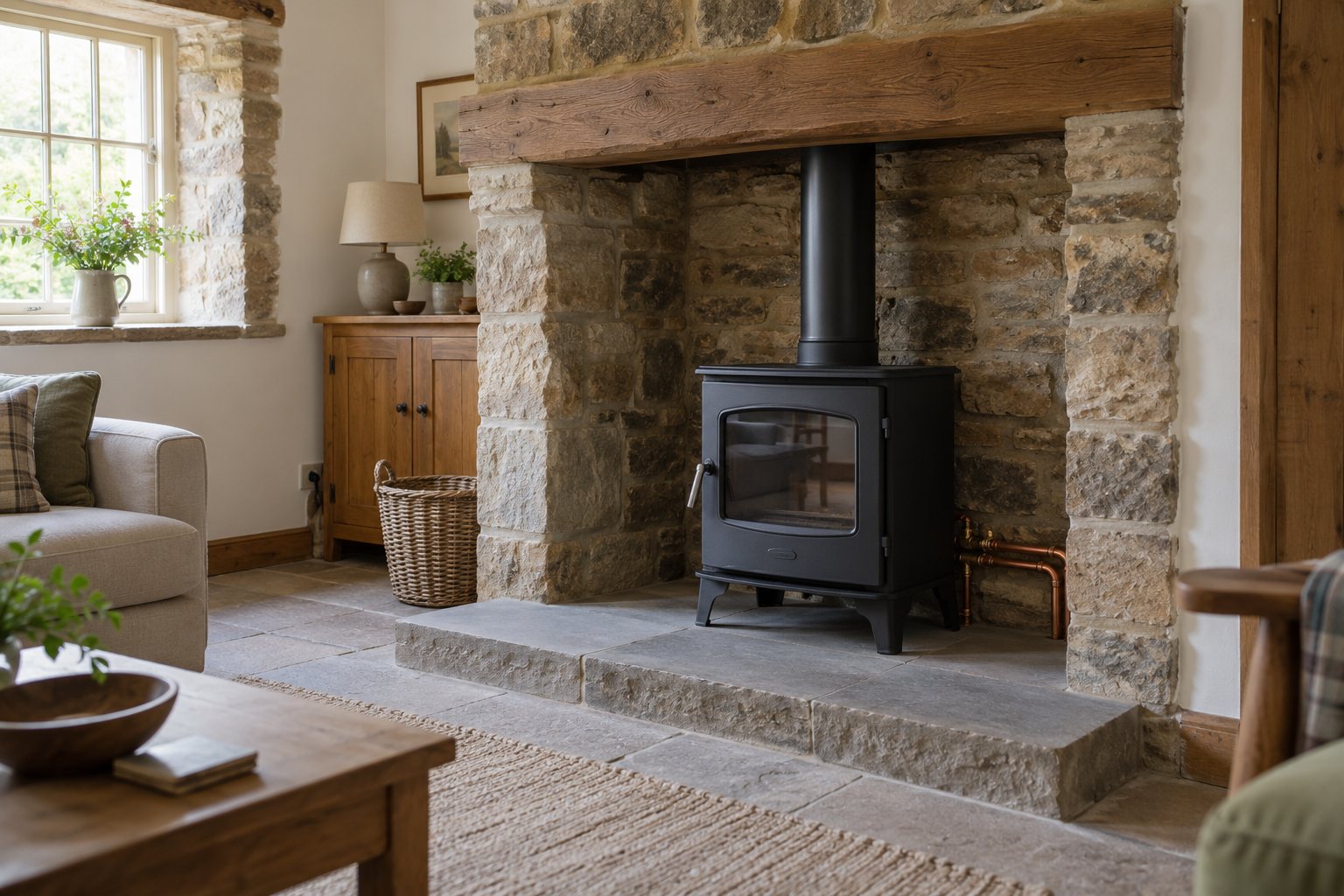
Solid fuel installation work covers replacing a worn or cracked back boiler, swapping an old open fire and back boiler for a more efficient boiler stove, or adding a solid fuel appliance alongside an existing oil or gas boiler. Because a fire cannot be switched off instantly like a gas burner, every installation needs a way to dump excess heat safely, and the safety plumbing is where most of the skill lies.
Plan for heat when the pump stops
A solid fuel fire continues producing heat after the controls stop calling for it. For an installation in your area, ask the designer to explain the gravity heat-leak route or other approved overheat protection. A boiler stove must be compatible with the proposed open-vented or sealed system; use only a design approved for that appliance. Include chimney inspection, floor protection, soot cleanup and operating instruction in the scope.
Signs you need solid fuel boiler work
- Water is weeping from behind the fire, hissing on the grate or rusting through the fire back
- The back boiler kettles, bangs or boils, especially when the fire is well alight
- Radiators barely warm even with a good fire, suggesting a scaled or blocked boiler
- Smoke spills into the room or tar runs down the chimney breast, pointing to a flue problem
- You are in a smoke control area and the existing appliance is not exempt for the fuel you burn
- You want to cut oil or LPG use by heating water from a stove you already light in winter
Older back boilers were often fitted to open-vented gravity systems that have since been altered. If the heat-leak radiator has been removed or a pump fitted without thought, the boiler may be running without a safe heat outlet. Ask a HETAS installer to check the whole circuit, not just the appliance.
Solid fuel boiler options explained
- Back boiler behind an open or inset fire — the traditional arrangement in many post-war homes. Cheap to replace like-for-like, but open fires are inefficient and the boiler output is modest.
- Boiler stove — a closed multi-fuel or wood-burning stove with an integral boiler, sending most of its output to the radiators and hot water while still warming the room. Usually needs a flexible flue liner and a compliant hearth.
- Independent solid fuel boiler — a dedicated boiler, often with a hopper or large firebox for longer burn times, capable of heating a whole house. Sometimes installed in a boiler house or outbuilding.
- Linked systems — a solid fuel appliance joined to an oil or gas boiler through a thermal store or a link-up unit, so the fire does the work when lit and the other boiler takes over automatically when it dies down.
Most solid fuel boilers must run on an open-vented system with a gravity heat-leak circuit, unless the appliance and system are specifically designed for sealed operation. That is why fitting one alongside a sealed combi is never as simple as connecting two pipes.
What to include when asking for a quote
State the fuel you burn or want to burn — seasoned logs, kiln-dried wood, smokeless ovoids or anthracite — and whether the appliance will heat the radiators, the hot water or both. Give the number of radiators and the size of the hot water cylinder if you know it, because the boiler output has to match what the system can absorb.
Describe the chimney: whether it is in regular use, when it was last swept, and whether it is already lined. Note anything you have noticed, such as smoke smells upstairs, damp patches on the chimney breast or loose pots. Say whether you are in a smoke control area; your council can confirm this. If you already have an oil or gas boiler, give its type and age so the installer can work out how the two will connect.
A good written quote names the appliance and its output to water and to room, the flue liner and register plate, hearth work, the heat-leak circuit and any thermal store or link-up unit, the pump and controls, a carbon monoxide alarm, removal of the old appliance and HETAS notification. Chimney repairs, such as rebuilding a stack or replacing pots, are often priced separately.
How much does a solid fuel boiler cost?
| Job | Typical cost |
|---|---|
| Like-for-like back boiler replacement behind an existing fire | £2,500 – £3,800 |
| Boiler stove with flue liner, hearth and plumbing | £4,000 – £6,500 |
| Independent solid fuel boiler or stove linked to an existing boiler via a thermal store | £5,500 – £8,000+ |
Chimney condition is the biggest unknown: a sound, straight flue needing only a liner is very different from one needing structural repair. These figures are a guide, not a quote.
The solid fuel installation process: what to expect
- Survey and chimney check. The installer inspects the fireplace, hearth and chimney, often with a smoke test, and checks the existing pipework and cylinder.
- Sweeping and opening up. The chimney is swept, and the old fire and back boiler removed. This is the dustiest stage, so furniture should be moved and covered.
- Flue and hearth. A liner is fitted where needed, with a register plate and a hearth meeting the required dimensions.
- Plumbing. The boiler is connected with a gravity heat-leak circuit, safety valves and, where linking to another boiler, a thermal store or link-up unit.
- Commissioning. The appliance is lit, the flue draw tested, and the controls and pump overrun checked.
- Handover. Ask for the applicable compliance or approval documents, operating instructions, a carbon monoxide alarm and advice on fuel and sweeping.
Planning permission and building regulations
In England and Wales, a suitably registered installer can notify eligible solid fuel work through a competent person scheme such as HETAS; building control is an alternative route. HETAS installer guidance explains this distinction. Scotland and Northern Ireland have their own building requirements. The design must address the hearth, ventilation, flue, carbon monoxide alarm and safe removal of heat from the water circuit. Check smoke control restrictions for the actual appliance and fuel, rather than assuming every wood-burning boiler is suitable.
In a smoke control area you may only burn authorised fuels, or use a Defra-exempt appliance for the fuel you intend to burn. Since 2023, the sale of traditional house coal for domestic use has been banned in England, and small quantities of wet wood cannot be sold. Planning permission is not normally needed for a flue through an existing chimney, but a new external flue on a listed building or in a conservation area may need consent.
How to choose a solid fuel installer
- Check HETAS registration covers the type of appliance being fitted, including boilers rather than just room stoves
- Ask how they will provide a heat-leak circuit and how the system will be protected if the pump fails
- Ask what condition they found the chimney in and whether a liner is needed
- Confirm a carbon monoxide alarm is included and where it will go
- Check whether the appliance is Defra-exempt if you are in a smoke control area
- Ask for examples of similar linked or boiler stove installations they have done
Many stove fitters only install room heaters with no boiler. Make clear from the start that you need a water-heating appliance, as the plumbing and safety requirements are much more demanding.
Frequently asked questions
Can a solid fuel boiler work with a combi?
Not directly. A combi runs on a sealed system and has no cylinder to store heat. Linking a solid fuel boiler normally means adding a thermal store or replacing the combi with a system that can accept a second heat source.
How often should the chimney be swept?
At least once a year for smokeless fuel, and more often when burning wood, which produces more tar and soot. HETAS and the chimney sweeping associations publish guidance on frequency for different fuels.
Can I burn coal on a solid fuel boiler?
Traditional house coal can no longer be sold for domestic use in England. Approved smokeless fuels such as anthracite and ovoids are still available, and some appliances are designed for them. Check what your appliance is approved for.
Do I need a carbon monoxide alarm?
Yes. A carbon monoxide alarm is required by the Building Regulations whenever a new or replacement solid fuel appliance is installed, and it is sensible to have one in any room with a fuel-burning appliance.
Request solid fuel boiler quotes
Combi Boiler Quotes is a matching service for independent heating businesses. One free online enquiry can help you receive up to four quotations from local solid fuel installers, depending on coverage, the work requested and availability. Four quotations are not guaranteed, and there is no obligation to accept one.
Describe the fireplace, chimney and heating system, along with the fuel you plan to burn, so installers can judge the job before contacting you.