
What is combi boiler replacement?
Combi boiler replacement means taking out an existing gas boiler and fitting a new condensing combination boiler that heats your radiators and supplies hot water on demand straight from the mains, with no hot water cylinder or cold water tanks in the loft. It covers two quite different jobs: swapping an old combi for a new one, and converting a home with a regular or system boiler and a cylinder to a combi for the first time.
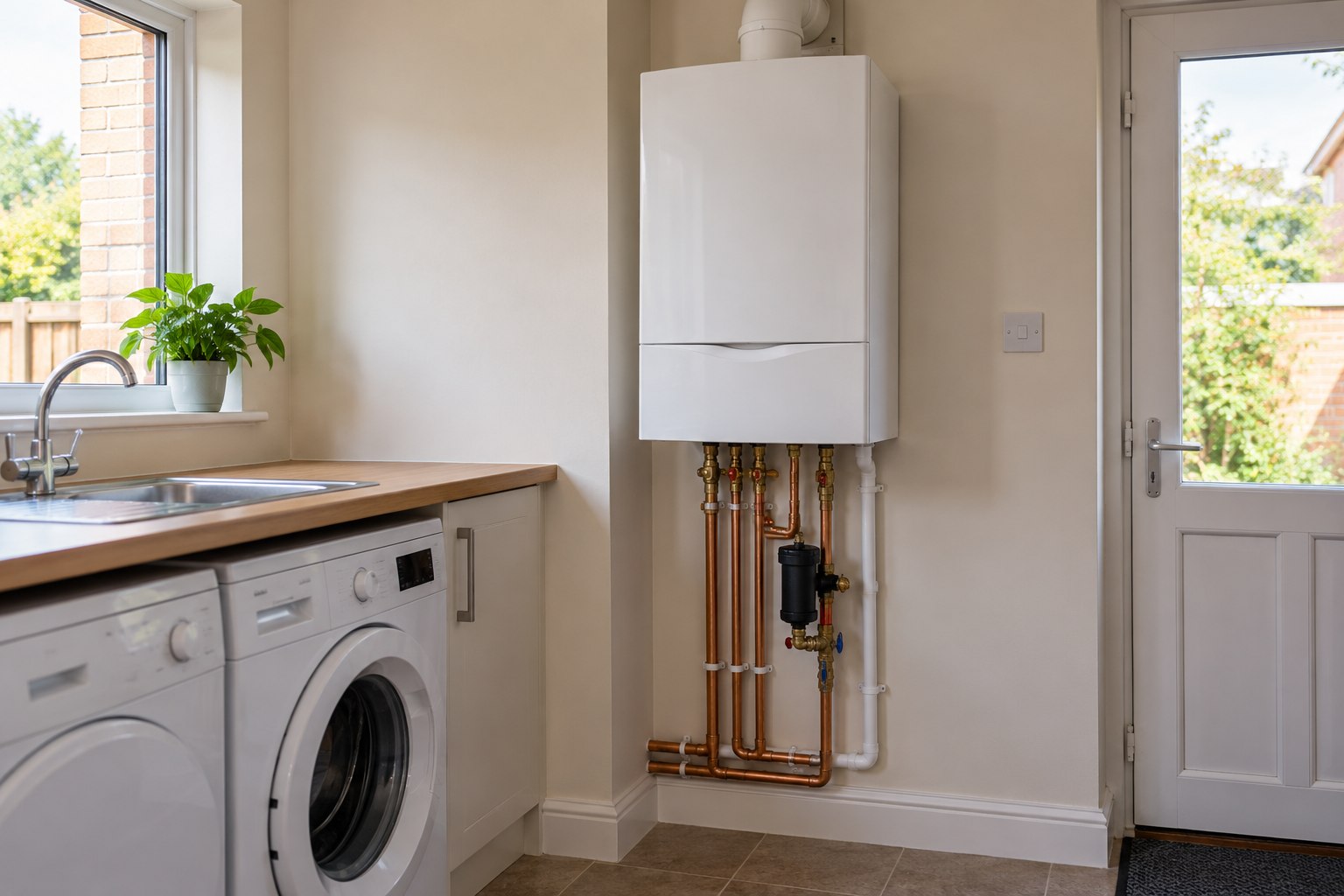
A like-for-like swap is usually finished in a day. A conversion takes longer because the cylinder, the feed and expansion tank and often a cold water storage tank all come out, the pipework is rerouted and capped, and the boiler may move to a new position. Either way, the job finishes with the boiler commissioned, the system cleaned and treated with inhibitor, and the installation registered for the warranty and Building Regulations.
Check the water supply before choosing a combi
Ask the engineer to measure the incoming mains flow and pressure before recommending an output. For homes in your area, explain whether two showers run together and whether any shower uses a pump. A system boiler and cylinder may suit higher simultaneous demand. On a conversion, identify which tanks still supply other fittings before agreeing their removal.
Signs you need combi boiler replacement
- Your combi is 12–15 years old or more and has needed a heat exchanger, diverter valve or PCB in the last couple of years
- Hot water goes cold whenever someone runs a tap elsewhere in the house, or takes a long time to arrive
- The boiler loses pressure repeatedly, pointing to a failed expansion vessel or a leak inside the casing
- Your engineer has said parts for the model are discontinued or only available second-hand
- An old non-condensing boiler with a pilot light is still heating the house, and gas bills are high
- You want to reclaim the airing cupboard and loft space used by a cylinder and tanks in a smaller home
Not every home suits a combi. A house with two or more bathrooms in regular simultaneous use, or weak mains water pressure, may be better served by a system boiler with an unvented cylinder. A good engineer will measure your incoming flow rate before recommending one.
Combi boiler options explained
- Like-for-like swap — the new combi goes where the old one was, often reusing the gas supply and condensate route but with a new flue kit. This is the quickest and cheapest version of the job.
- Conversion from a system or regular boiler — the hot water cylinder, tanks and associated pipework are removed. Expect extra labour, making good in the airing cupboard and loft, and possibly a larger gas pipe.
- Relocated combi — moving the boiler to a utility room, garage or loft adds gas pipe, condensate and sometimes a vertical flue through the roof. Loft installations need boarding, lighting and a fixed ladder for future servicing.
- Storage combi — a combi with a small built-in hot water store, useful where the household wants combi convenience but takes back-to-back showers.
Output is quoted in kilowatts, but the number that matters for hot water is the flow rate in litres per minute. Roughly, a 24–28 kW combi suits a flat or small house with one shower, 30–35 kW a typical three-bedroom home with one bathroom, and 35–40 kW a larger home with a bathroom and an en-suite — always subject to what your mains supply can deliver.
What to include when asking for a quote
Tell the engineer how many bathrooms, showers and baths the house has and how often two are used at once. A family that showers back to back before school needs a different combi from a couple. If you know your mains flow (fill a bucket from the kitchen cold tap for 10 seconds and multiply by six), include it; otherwise ask the engineer to measure it during the survey.
Describe what you have now: a combi, or a boiler with a hot water cylinder and tanks in the loft. Say where the current boiler is and whether you want it moved, and where the flue exits — through a side wall close to a neighbour's window, a rear wall or the roof. Flues have minimum distances from windows, doors, gutters and boundaries, and a flue that met the rules in 2008 may need a plume kit or a different route now.
A good written quote names the boiler make, model and output, the length of the manufacturer's warranty and what servicing it depends on, the flue kit, the controls being fitted, whether a magnetic filter is included, how the system will be cleaned, and whether removing the cylinder, tanks and old boiler is in the price. It should also confirm that the installer will notify the work through Gas Safe and register the warranty.
How much does combi boiler replacement cost?
| Job | Typical cost |
|---|---|
| Like-for-like combi swap, same position | £1,900 – £2,800 |
| Combi swap with relocation or new flue route | £2,600 – £3,500 |
| System or regular boiler to combi conversion | £3,000 – £4,200+ |
The biggest price differences come from the boiler brand and warranty, how much the pipework changes and whether the system is power flushed. These figures are a guide, not a quote; ask each engineer for an itemised written price.
The combi replacement process: what to expect
- Survey. The engineer checks the boiler position, flue route, gas pipe size, mains water flow and the radiators, then recommends a model and output.
- Drain down and removal. On the day, the system is drained and the old boiler, plus any cylinder and tanks in a conversion, is disconnected and removed.
- Pipework and flue. Gas, water and condensate pipes are adapted or rerouted, and the new flue is fitted to meet current clearance rules.
- Cleaning. The system is chemically flushed or power flushed, a magnetic filter fitted if agreed, and inhibitor added.
- Commissioning. The engineer checks gas pressure and combustion, sets the flow temperature and controls, and fills in the Benchmark checklist.
- Handover. You should be shown how to use the controls and repressurise the boiler, and told when the first service is due.
Planning permission and building regulations
Paid work on a gas boiler must be carried out by a business on the Gas Safe Register, using an engineer qualified for that appliance and fuel. In England and Wales, a suitably registered installer can notify a replacement through the relevant scheme; ask who handles notification and when the compliance certificate will arrive. Scotland and Northern Ireland have separate building standards and approval procedures. Confirm the route for your property before work starts. Controls, flue clearances and condensate disposal must meet the rules applying to the installation.
In England, new gas combis must meet minimum efficiency standards and be fitted with time and temperature controls, plus at least one additional energy-saving measure such as weather compensation, load compensation, smart controls with optimisation or flue gas heat recovery. Scotland, Wales and Northern Ireland have their own building standards, so ask your engineer which apply to your home.
How to choose a combi boiler installer
- Check the engineer's Gas Safe registration number and that their card lists gas boilers
- Ask whether they are an accredited installer for the boiler brand, which can unlock a longer warranty
- Ask how they sized the boiler, and whether they measured the mains flow rate
- Confirm how the system will be cleaned and whether a magnetic filter is included
- Find out who registers the warranty and when the compliance certificate will arrive
- Ask what happens if a fault appears in the first few weeks, and who you call
Be cautious of a quote given over the phone without a survey or photographs. Sizing, flue position and gas pipe capacity all need checking at the property.
Frequently asked questions
Will a combi give me enough hot water?
A correctly sized combi gives continuous hot water to one outlet at a time, and some larger models can manage two. If your home has more than one bathroom in regular use at once, or mains flow is below about 10 litres per minute, a system boiler with a cylinder or a storage combi may suit you better.
Can I keep my power shower with a combi?
No. Shower pumps must not be connected to a mains-fed combi supply. A combi's shower runs at mains pressure, which is often stronger than an old gravity system, but the pump has to be removed when converting.
How long will I be without heating and hot water?
For a like-for-like swap, usually one working day. A conversion from a system or regular boiler can take two days, with hot water off for most of that time. Your installer should tell you in advance.
Do I need to power flush before a new combi?
Most manufacturers require the system to be cleaned before a new boiler is fitted, and some warranties depend on it. The method can be a chemical flush or a power flush, depending on how much sludge is in the radiators.
Request combi boiler replacement quotes
Combi Boiler Quotes is a matching service for independent heating businesses. One free online enquiry can help you receive up to four quotations from local Gas Safe registered engineers, depending on coverage, the work requested and availability. Four quotations are not guaranteed, and there is no obligation to accept one.
Describe your current boiler, the number of bathrooms and whether you want it moved, so engineers can judge the job before contacting you.