
What is oil boiler replacement?
Oil boiler replacement is the removal of an old kerosene-fired boiler and the installation of a new condensing oil boiler, usually in homes that are not connected to the mains gas network. It is common in rural villages, farmhouses and coastal properties, and in much of Northern Ireland, where heating oil is delivered by tanker to a storage tank in the garden.
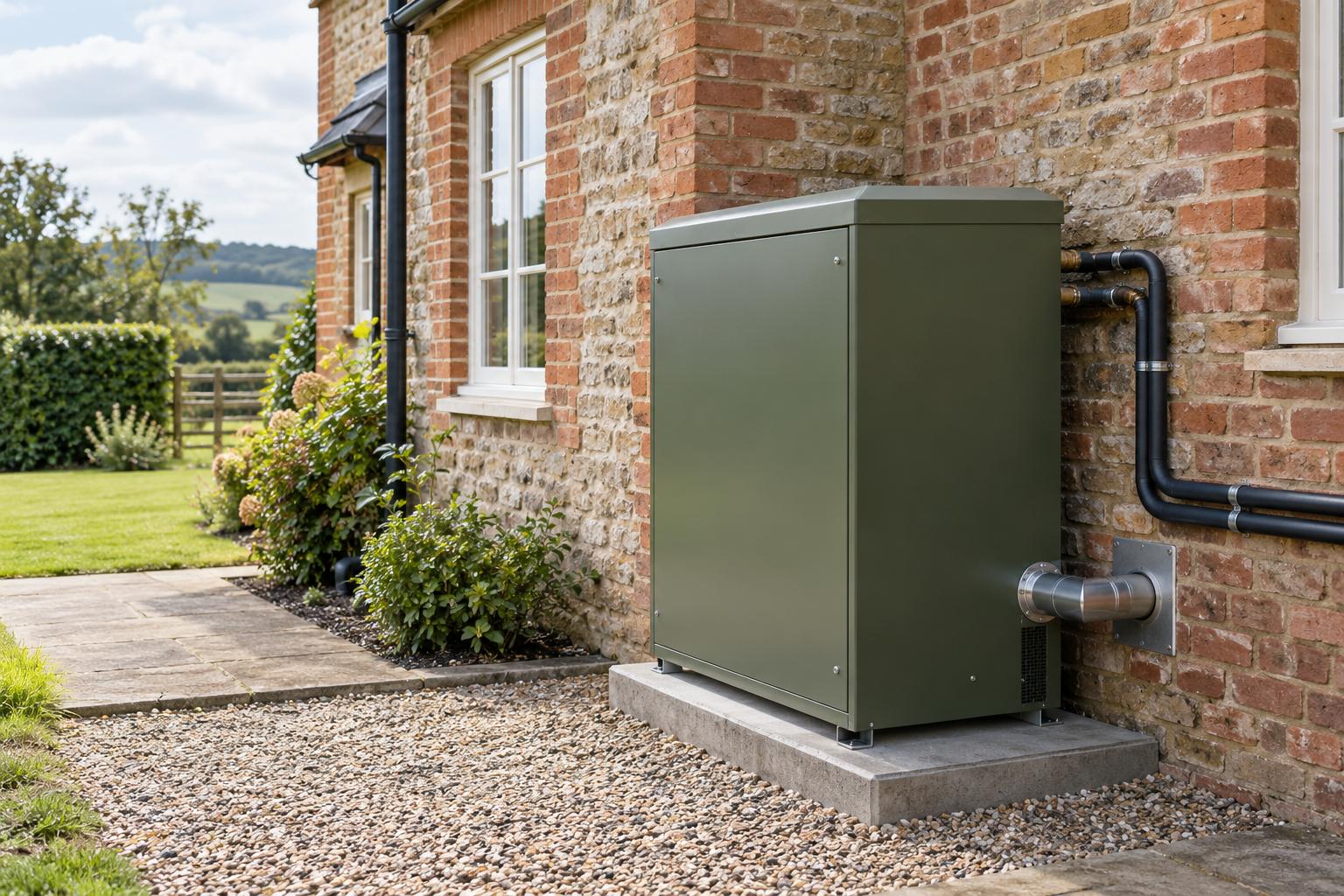
Modern oil boilers condense: they recover heat from the exhaust gases that older models sent straight up the flue, which typically makes them noticeably more efficient than a boiler from the 1990s or early 2000s. A replacement is also the moment to check the rest of the oil supply — the fire valve, the fuel line and filter, and the tank itself — because a new boiler fed by a corroded tank or a perished pipe is still a weak point.
Include the tank and fuel line in the survey
An old tank can change the scope even when the replacement boiler stays in the same place. For a home in your area, flag narrow delivery access and the route between the tank and boiler. The technician may need to renew the fire valve, filter or protected pipework. Specify who removes the redundant boiler, handles any fuel transfer and leaves the work area clean.
Signs you need oil boiler replacement
- The boiler is over 15 years old, non-condensing and burning noticeably more oil each winter
- It produces sooty smoke from the flue, a strong kerosene smell indoors or repeated lockouts
- The heat exchanger or combustion chamber is cracked, scaled or rusting through
- Your OFTEC technician has warned that parts for the burner or controls are no longer made
- Oil is weeping from the boiler or the burner pump, or there are oil stains on the floor beneath it
- A kitchen refit or extension means the boiler has to move, and you want to avoid paying to relocate an old one
An oil boiler that keeps cutting out is not always worn out. Water in the tank, a blocked filter or a sludged nozzle can cause the same symptoms, so it is worth asking for a diagnosis before committing to a new one.
Oil boiler options explained
- Indoor oil boiler — sits in a kitchen, utility room or boiler house, with a balanced flue through the wall or a conventional flue up a chimney liner. Usually the cheapest model to buy.
- External oil boiler — a weatherproof unit fitted outside on a solid base, freeing space inside and keeping burner noise and any oil smell out of the house. The pipework to and from the house needs to be well insulated.
- Oil combi — provides hot water on demand without a cylinder, much like a gas combi. Best suited to smaller homes with one bathroom and good mains water flow.
- System or regular oil boiler — works with a hot water cylinder, which suits larger homes with several bathrooms or where the cylinder is already in good condition.
Some newer oil boilers are designed or approved to run on HVO (hydrotreated vegetable oil), a lower-carbon liquid fuel, either straight away or after a conversion kit is fitted. If that interests you, ask whether the model you are quoted for is HVO-compatible, and check with the manufacturer what conversion would involve.
What to include when asking for a quote
Say whether the current boiler is inside or outside, where it is, and whether it is a combi or works with a hot water cylinder. Note how the flue leaves the building: a low-level balanced flue through a wall, a conventional chimney flue, or a high-level external flue. Oil boiler flues must be kept well away from openings and boundaries, and the rules are different from gas.
Give the age and material of the oil tank (steel, single-skin plastic or bunded plastic) and photograph it with its base. Tell the technician how far it is from the house, a boundary fence and any drain, ditch or watercourse. A tank that is close to the end of its life, sits on a cracked base or is too close to a building may need replacing, and that can cost almost as much as the boiler.
A good written quote names the boiler make, model and output, its warranty and servicing conditions, the flue, the fire valve and fuel line work, the oil filter, controls, system cleaning and removal of the old boiler. It should state whether any tank work is included or quoted separately, and confirm the notification or building approval route for your part of the UK.
How much does oil boiler replacement cost?
| Job | Typical cost |
|---|---|
| Indoor condensing oil boiler, same position | £3,000 – £4,200 |
| External condensing oil boiler or oil combi | £3,800 – £5,200 |
| Relocated boiler with new flue and fuel line | £4,800 – £6,500+ |
A replacement oil tank is normally priced separately and can add £1,500–£3,500 depending on capacity and access. These figures are a guide, not a quote.
The oil boiler replacement process: what to expect
- Survey. The technician checks the boiler position, flue route, tank, fuel line and heating system, and recommends a boiler type and output.
- Isolation and drain down. The oil supply is isolated at the tank, the heating system is drained, and the old boiler is disconnected and removed.
- Installation. The new boiler is fixed in place, connected to the flue, heating pipework and condensate drain, and a new oil filter and fire valve fitted if needed.
- Cleaning and refilling. The system is flushed and inhibitor added before it is refilled and vented.
- Commissioning. The burner is set up with a combustion analyser so that it burns cleanly, and the controls are configured.
- Paperwork. You should receive the commissioning record and, where applicable, the scheme compliance certificate or building approval documents.
Planning permission and building regulations
Use a competent oil heating installer and agree how the work will meet local building requirements. Under the appropriate OFTEC installation registration, self-certification is available in England and Wales; Scotland and Northern Ireland use different approval procedures. OFTEC consumer guidance explains the scheme. Tank condition, fire protection, spill containment and fuel-line safety need assessing even when only the boiler is being replaced. Registration for servicing alone does not establish installation competence.
External oil boilers and new tanks are usually permitted development, but check with your local authority if the property is listed, in a conservation area or the tank would be close to a boundary. The government has consulted on phasing out new fossil fuel heating in homes off the gas grid, so it is worth asking your installer about current rules and lower-carbon alternatives before you commit.
How to choose an oil boiler installer
- Check OFTEC registration and that it covers installation, not just servicing
- Ask how they calculated the boiler output for your home
- Ask them to inspect and comment on the tank, base and fuel line in writing
- Confirm the fire valve, filter and any flue alterations are in the price
- Find out the warranty length and what servicing it requires
- Ask who will notify the work and when the compliance certificate will arrive
Oil technicians are thinner on the ground than gas engineers, especially in remote areas, so allow time to collect quotes and avoid waiting until the old boiler fails in January.
Frequently asked questions
Can I switch from oil to gas?
Only if a gas main runs near your property and the gas network will connect you. Connection can be expensive and take months. Many rural homes have no realistic gas option, which is why oil, LPG, biomass and heat pumps are the main choices.
Do I need a new oil tank with a new boiler?
Not necessarily. If the tank is in good condition, meets the separation and bunding rules, and is not leaking or bulging, it can stay. Many installers recommend replacing single-skin steel or plastic tanks that are more than 20 years old.
Is an external oil boiler better than an indoor one?
Neither is better in every case. External boilers save indoor space and keep noise and smells outside, but cost a little more and need well-insulated pipe runs. Indoor boilers are often cheaper and easier to service in bad weather.
How often should an oil boiler be serviced?
Once a year, by a competent oil technician, such as one with the appropriate OFTEC servicing registration. A service usually includes a new nozzle and filter, cleaning the combustion chamber and adjusting the burner with a flue gas analyser.
Request oil boiler replacement quotes
Combi Boiler Quotes is a matching service for independent heating businesses. One free online enquiry can help you receive up to four quotations from local oil heating technicians, depending on coverage, the work requested and availability. Four quotations are not guaranteed, and there is no obligation to accept one.
Describe your oil boiler and tank, including where both are and roughly how old they are, so technicians can judge the job before contacting you.