
What is a biomass boiler?
A biomass boiler is a central heating boiler that burns wood pellets, logs or wood chip instead of gas or oil to heat radiators, underfloor heating and hot water. Domestic biomass boilers are mostly found in larger, rural and off-gas-grid homes, where there is room for the boiler itself, a large buffer tank and a fuel store, and where the alternative is often oil or LPG.
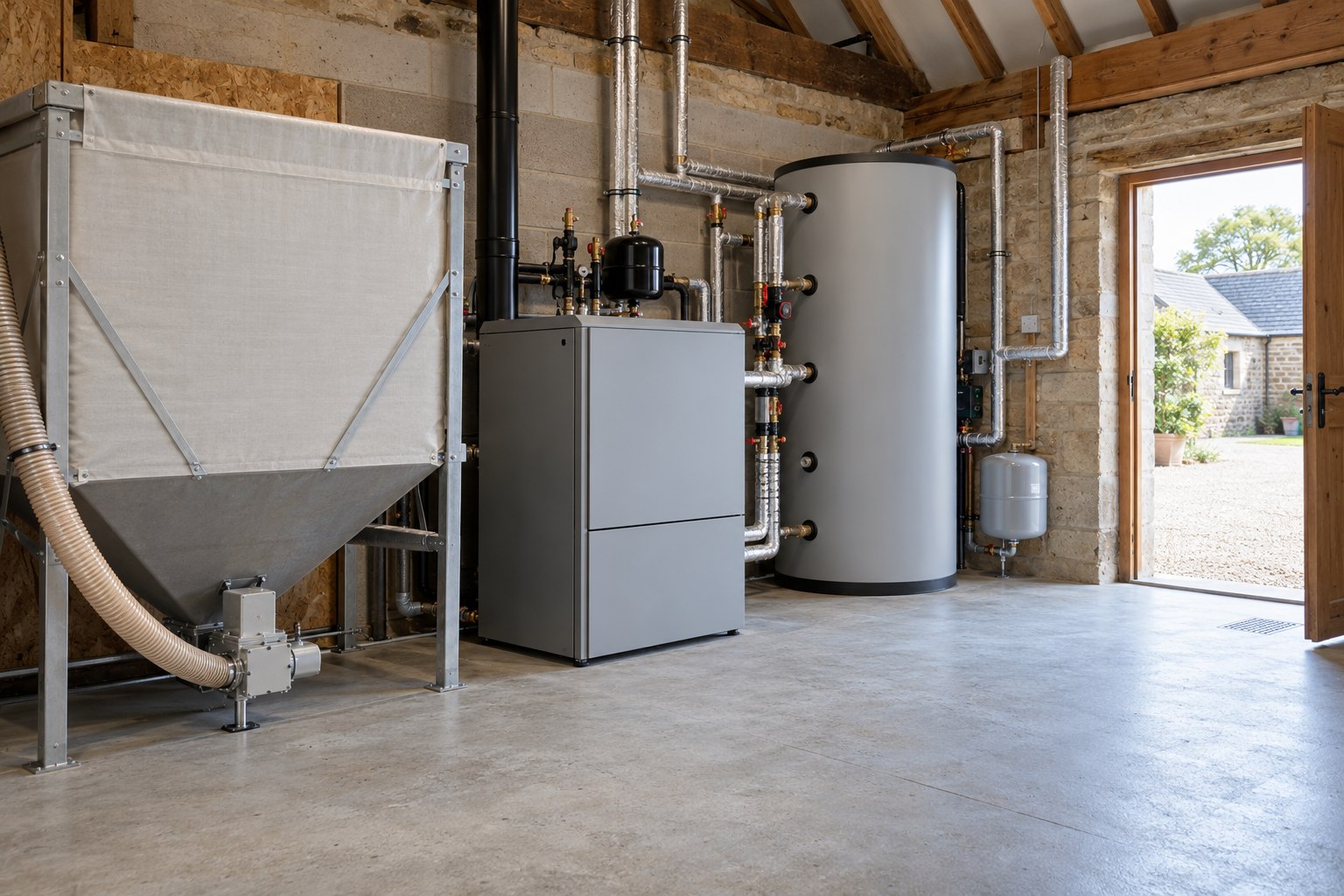
Biomass installation is a bigger project than any fossil fuel boiler swap. The design has to account for fuel delivery and storage, a correctly sized buffer tank that lets the boiler run in long efficient burns, a flue that clears the roofline, and controls that integrate with the hot water cylinder. A well-designed system gives a whole house low-carbon heat from a renewable fuel; done badly, it can mean frequent cleaning, poor combustion and smoke.
Check fuel deliveries and everyday maintenance
A pellet boiler needs a practical delivery route as well as room for the appliance. At a property in your area, discuss delivery vehicle access, hopper filling and the distance to neighbouring windows. Request a heat-loss calculation, buffer sizing, predicted annual fuel use and a maintenance schedule. Include ash handling, flue sweeping, commissioning, owner training and any required certification in the quotation.
Signs a biomass boiler may suit your home
- Your home is off the gas grid and currently heated by oil, LPG or electric storage heaters
- The property is large, older or hard to insulate, with a high heat demand that a heat pump may struggle to meet without major upgrades
- You have space for a plant room or outbuilding and a dry fuel store with access for deliveries
- You have your own supply of seasoned timber, or a reliable pellet or chip supplier nearby
- Your existing oil boiler is near the end of its life and you want to move away from fossil fuels
- You are prepared to empty ash and carry out routine cleaning, or pay for an automatic system that does more of it
Biomass is rarely a good fit for a small urban house: the space, fuel deliveries and smoke control rules usually make a heat pump or gas boiler more practical there.
Biomass boiler types explained
- Pellet boiler — the most common domestic choice. Pellets are fed automatically from a hopper or bulk store by auger or vacuum, so the boiler lights and modulates much like an oil boiler. Bulk pellets are blown into the store from a delivery tanker.
- Log gasification boiler — loaded by hand once or twice a day with seasoned logs, burning at high temperature into a large accumulator tank. Cheapest to fuel if you have your own wood, but the most hands-on.
- Wood chip boiler — suits large properties, farms and estates with space for a big fuel store and access for tipping trailers. Chip is cheaper per unit of heat but bulkier than pellets.
- Pellet boiler stove — a smaller room-sited appliance with a back boiler, used where a whole-house system is not practical.
Whichever type you choose, a buffer tank is almost always part of the design. It stores heat so the boiler can burn steadily rather than cycling on and off, which reduces soot, tar and wear.
What to include when asking for a quote
Give the floor area of the house, its age and construction, the number of radiators and whether any underfloor heating is planned. Include your current annual oil, LPG or electricity use if you have it, as this is the most reliable guide to heat demand. An MCS installer will normally carry out a room-by-room heat loss calculation, but recent fuel bills help them sanity check it.
Describe where a boiler, buffer tank and fuel store could go: a garage, outbuilding, cellar or new plant room. Say how close a delivery lorry could get, as pellet tankers blow fuel through a hose that has a limited reach. Mention whether you are in a smoke control area and whether you intend to apply for the Boiler Upgrade Scheme, because that determines which appliances and installers are eligible.
A good written quote names the boiler model and output, the buffer tank size, the fuel store design and capacity, the flue and its height, controls and integration with the hot water cylinder, the expected annual fuel use, maintenance requirements and warranty terms. It should confirm MCS certification for the installation and HETAS or equivalent sign-off, and set out what grant the installer will apply for on your behalf.
How much does a biomass boiler cost?
| Job | Typical cost |
|---|---|
| Log gasification boiler with accumulator tank | £10,000 – £14,000 |
| Automatic pellet boiler with hopper and buffer tank | £13,000 – £18,000 |
| Pellet boiler with bulk fuel store, plant room works and new flue | £17,000 – £22,000+ |
Eligible installations in England and Wales may receive a £5,000 Boiler Upgrade Scheme grant, deducted from the price by the installer. These figures are a guide, not a quote.
The biomass installation process: what to expect
- Survey and heat loss. The installer assesses the house, calculates heat demand and checks space for the boiler, buffer tank, fuel store and flue.
- Design and grant. A system is designed and quoted, and if eligible, the installer applies for the Boiler Upgrade Scheme voucher.
- Preparation. Any plant room, base or fuel store construction is completed, and the old boiler removed.
- Installation. The boiler, buffer tank, flue, fuel feed and pipework are fitted and connected to the heating and hot water.
- Commissioning. The boiler is fired, combustion adjusted and controls set up, and you are shown how to fuel, clean and empty ash.
- Certification. Ask for commissioning and building approval documents, MCS certification where applicable, and the servicing schedule.
Planning permission and building regulations
Agree the building approval route for the boiler, flue and any plant room before ordering. Competent person self-certification for eligible work in England and Wales is separate from MCS certification for a grant. The Boiler Upgrade Scheme eligibility rules include additional conditions for biomass: the property must be rural and not connected to the gas grid, and the scheme applies in England and Wales. An MCS certified installer should confirm the property, appliance and proposed replacement are eligible before a grant is included in your budget.
A biomass boiler inside an existing building is often permitted development, but a flue projecting more than a set height above the roof, a new outbuilding or plant room, or any work to a listed building or in a conservation area may need planning permission. In a smoke control area the appliance must be exempt for the fuel used. Check with your local planning authority before committing.
How to choose a biomass installer
- Check MCS certification for biomass and HETAS or equivalent registration
- Ask for a written heat loss calculation and how they sized the boiler and buffer tank
- Ask to visit or speak to the owners of similar installations they have done
- Confirm the fuel store capacity and how often you will need deliveries
- Find out the annual servicing cost and what cleaning you will need to do yourself
- Check who handles the Boiler Upgrade Scheme application and when the grant is deducted
Biomass installers are specialists and fewer in number than gas engineers. A visit to a working system before you commit is the best way to understand the space, noise and day-to-day effort involved.
Frequently asked questions
Is there a grant for biomass boilers?
In England and Wales, the Boiler Upgrade Scheme offers £5,000 towards an eligible biomass boiler, for rural properties not connected to the gas grid that meet the other scheme rules. The installer must be MCS certified and applies on your behalf. Check the current rules on GOV.UK before relying on the grant.
How much space does a biomass boiler need?
More than a gas or oil boiler. Allow space for the boiler, a buffer tank that may hold several hundred litres or more, and a dry fuel store. A plant room, garage or outbuilding is common for pellet and chip systems.
How much maintenance does a biomass boiler need?
Ash needs emptying regularly, from weekly to monthly depending on the boiler and how hard it works. Many pellet boilers have automatic cleaning, but all need a professional service at least once a year, along with flue sweeping.
Can I install a biomass boiler in a smoke control area?
Only if the appliance is exempt for use in a smoke control area with the fuel you intend to burn. Your installer should be able to confirm this, and your local council can tell you whether your address is in a smoke control area.
Request biomass boiler quotes
Combi Boiler Quotes is a matching service for independent heating businesses. One free online enquiry can help you receive up to four quotations from local biomass installers, depending on coverage, the work requested and availability. Four quotations are not guaranteed, and there is no obligation to accept one.
Describe your home, current heating and available space, so installers can judge whether biomass is suitable before contacting you.